Skills Bootcamp - Heat Recovery & Transfer

Course Overview
This Skills Bootcamp has been commissioned by York and North Yorkshire Combined Authority, using funding from government. Short course aimed at employed individuals working in any sector who are looking to lower CO2 emissions, reduce energy costs and help the UK meet net-zero targets. Skills Bootcamp in Heat Recovery and Transfer is designed to provide learners with the higher technical skills and knowledge to implement heat recovery and transfer solutions.
Benefits of Studying Heat Recovery and Transfer:
- Learn how to scope and specify a heat recovery transfer system for your business or home
- Be at the forefront of new and emerging green technologies
- Understand how heat recovery technology can reduce energy costs
Benefits of using heat recovery and transfer in industry or the home:
- Save on energy costs
- Reduce emissions
- Get ahead of future net-zero regulations
What You Will Study
Delivered within Selby College’s brand-new Carbon Capture and Storage centre and its Institute of Technology laboratory, learners will have the opportunity to use cutting edge technology and training rigs.
The course will be delivered one day a week over five weeks in the classroom, with a mixture of theory and online immersive learning.
What is heat recovery and transfer?
Heat recovery and transfer is the practice of capturing heat from a source and making use of it in another place or for another process. This could be capturing the heat from a factory production line and using it to heat the factory offices or transferring heat from a furnace and using it to increase the efficiency of a heat pump. Various technologies, systems and methods can be used to capture and transfer heat.
At Selby College, we have various training rigs which simulate the technology and processes used in heat recovery and transfer. By using rigs which mimic real-world methods, learners are able to carry out experiments and generate data on the efficiency of these methods and scope how successfully a solution could be implemented in their particular industry, business or property.
How can heat recovery and transfer solutions be applied?
Many businesses and homes could make use of simple heat recovery solutions to reduce emissions and energy consumption. Making better use of heat that is produced anyway is going to play a key part in the UK meeting net-zero targets. Whilst much of the technology used in heat recovery has existed for some time, using it in a systematic way to save energy, reduce cost and create efficiencies is new but starting to gain traction. For example, there are plans underway in the UK to build data centres linked to community swimming pools – the pool gets heated and in return, the data centre is cooled.
What will the course cover?
- Heat, energy and thermo-dynamics
- Heat recovery technologies
- Scoping and specification of heat recovery and transfer systems
- Plus much more..
Friday 9am-5pm. Plus online study.
You will create, in small groups, a proposal for a heat recover and transfer system that could be implemented in your workplace or home and deliver this to the rest of the class.
- 19+
- Work or live in York and North Yorkshire region
Free for learners who self-refer.
Employers who refer staff will have to pay a contribution - £300pp if you are and SME (fewer than 250 employees) and £900pp for large businesses (250+ employees).
Completion can result in increased responsibilities within an existing role or open up opportunities for a new role. Employers enrolling their employees onto the course will be able to implement heat recovery and transfer projects within their business or adapt the technology and learning for other applications
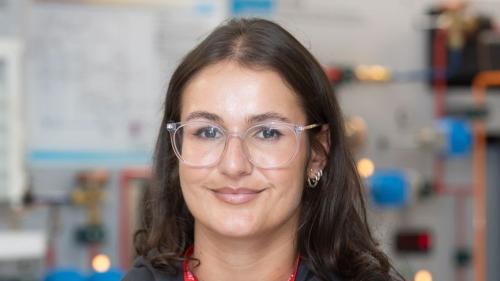
I plan to take this newfound knowledge back to my team and explore the safety and environmental aspects of it, allowing us to support the projects team more.
Engineering